

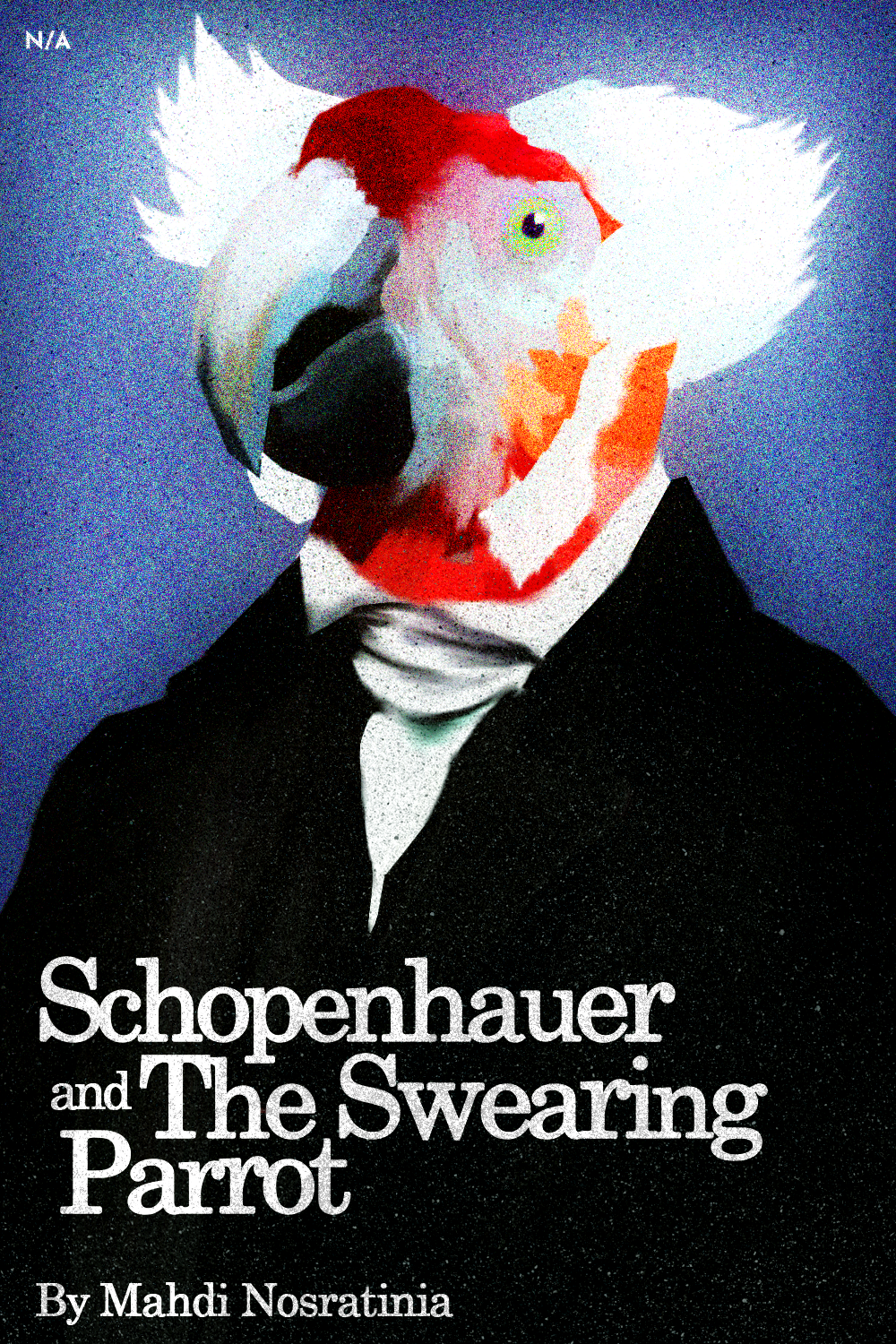
A hangover begs for more poison. Pessimism does the same for despair—one numbs the symptoms, the other rewires the brain. The difference? Alcohol leaves your system. Pessimism becomes your system. And sometimes, that’s exactly what you need to survive.
Today marks exactly five years since I decided self-annihilation was not an option. I had chosen the method. (pills, in case you’re wondering). The time and place were still undecided. I was at home, looking through the books the previous owner had left in the basement. I found a collection of essays by Schopenhauer and began to browse.
It’s not often I find five remarkable sentences in an entire book. I found six in that one—and I hadn’t even properly started reading.
One line in particular resonated in that darkest of hours: “Life swings like a pendulum backward and forward between pain and boredom.”
I’d worn my suffering like a crown, believing the universe had singled me out for mockery. Now I saw the truth: existence didn’t care enough to mock. The pain would pass not because I mattered, but because nothing did. That this was the crest meant only that soon—blessedly, terribly—I’d feel less.
In an age where unhappiness was treated like a software glitch, Schopenhauer’s “All life is suffering” cut through me like mountain wind shredding fog. For the first time in years, the world stood sharp and terrible—but clear.
The book didn’t offer answers—just life’s darkest truths, told in a tone so oddly gentle, it felt like someone handing you a mug of tea while informing you that yes, everything is pointless.
Of course you’re suffering. Honestly, I’d be concerned if you weren’t. You feel hopeless? Good. That just means you’re paying attention.
Schopenhauer didn’t save me. He gave me the vocabulary for despair. For the shipwrecked, even a flawed compass is precious. I was thirty-three. My career had gone up in flames, I’d lost my savings chasing biotech stocks, and my girlfriend was sleeping with my best friend. By the time I found that book in the basement, my life already read like a cautionary tale. And somehow, Schopenhauer made it sound like I wasn’t alone.I started to appreciate his ways—and even tried applying them.
Two years later, I realized I was probably the only self-identifying Schopenhauerian I’d ever met. We’re a rare breed: rarer than people with grey eyes, slightly more common than cats who pay rent.
I deleted my LinkedIn account, shredded my résumé, and dumped my textbooks—the remains of a degree I’d abandoned years ago. Next went my business plans, useless course certificates, and every scrap of ambition I’d been stubbornly clinging to. They were nothing but deadwood, yet I’d treated them like sacred relics.
I burned everything tied to my future plans in an empty flower pot. The yellow-orange flames were mesmerizing. The scent of burnt dreams? Intoxicating. They had represented hope, and I was sick of hope. I welcomed hopelessness with open arms. In fact, I was proud of it. As the wise man said—he who has lost all hope has also lost all fear. It wasn’t just a clever maxim. I felt it. Last time I went to the dentist, I was about 17% less afraid. If that’s not progress, I don’t know what is.
Food became fuel. Clothes, armor. Schopenhauer had feasted on roast beef and metaphysics; I subsisted on rice and rationalizations. He had inherited enough to write his books uninterrupted—I had just enough to cover rent. I rented out my flat in the city and moved to a small town. The town I chose had a library, a cemetery, and forests that outlasted every fool who’d ever walked through them—myself especially.
I accepted his metaphysical framing only in part. Schopenhauer’s Will—the blind, thrashing engine of life—was, in his view, inescapable. Suicide wouldn’t extinguish it, only the individual’s experience of it. That made some philosophical sense. But I wasn’t looking for metaphysical coherence. I wanted a way to survive.
There were reprieves from suffering, he insisted—ways of stepping outside the Will’s grip. Immersion in beauty, especially music. The contemplation of art. That was his medicine, and I decided to try it. I wasn’t the artistic type, but he didn’t demand talent—just appreciation. A decent internet connection handled the art part, mostly via algorithm-curated playlists and streaming services that claimed to understand me better than I did. The beauty was all around me, in the mountains and forests. That part required effort.
I walked in the forest. Climbed mountains. Read. Listened to music. Watched films. Emotionally, I was detached. Less involved. Progress.
Life was peaceful, suspiciously pleasant. Good enough to threaten my pessimism. Not terrible— just philosophically unlivable. An upgrade, honestly.
The ashes of my ambitions still smelled like printer ink when I left town abruptly. No one knew where I’d gone. In my now-vacant apartment, I’d left one last note—Schopenhauer’s words taped to the fridge like a grocery list:
“Happiness must come from within.”
Which explained why I’d failed to find it elsewhere.
A final thought for the tenant to discard.
My journal’s opening page bore his second commandment: All sorrows spring from others.
Beneath it, a tally in smudged ink: three betrayals, eleven heartbreaks, forty-seven stupid arguments. The evidence was irrefutable.
The world rewarded two breeds: the blissfully average and those cunning enough to exploit them. Schopenhauer had names for us outliers too—the ‘unsocial intellects’—while the exploiters earned his label ‘sociable scoundrels’. I knew which camp I belonged to.
His observations cut so close to the bone, I sometimes checked the publication date—impossible that he’d written this about me specifically. Yet there it was: my inner life dissected a century before my birth. No flattery in recognizing the match; only the uncomfortable precision of a lock fitting its key.
On solitary morning walks, I never once wished for company—the forest needed no audience, the mountain views no witnesses. ‘A man can be himself only so long as he is alone,’ Schopenhauer wrote, and I finally understood: solitude didn’t reveal my authentic self so much as incinerate the false ones. Unseen. Unjudged. Unburdened. This was the freedom he promised— the kind only those who love solitude can recognize.
I never expected the tranquility to last—naivety had burned away with my business plans. Within weeks, the cracks appeared. Morning walks became mere exercise; birdsong and rustling leaves turned to background noise. Trees shed their majesty, becoming just living wood. Rabbits might as well have been alley cats.
The forest scent, like my morning tea, registered only as ‘pleasant.’ I moved through the woods in a haze of rumination and hypothetical arguments, while actual grunting animals argued their own Darwinian debates nearby. Wasps conducted aerial strikes. Even mountain summits offered only fleeting triumph before the plodding descent.
Schopenhauer had warned: ‘Boredom is just the reverse side of fascination.’ Now I understood— my paradise hadn’t vanished; I’d simply completed its autopsy.
Reading fared no better. Each paragraph became a skirmish against distraction. I switched from Schopenhauer to supermarket fiction—champagne to boxed wine—but the words had lost their alchemy.
Boredom’s tide kept rising. YouTube’s respite grew thinner with each video—soon even distraction would fail. The old man’s twin poles held me fast—’Want and boredom are the axis on which human life spins.’ No wonder I felt dizzy.
Of course I’d seen it coming. The real question was whether I’d rigged the outcome—another failed experiment in living. His philosophy, like all strong medicine, turned toxic in excess. Yet I kept swallowing it; the placebo still numbed better than reality.
The epiphany struck mid-stride: I needed to create, not consume. An absurd notion for someone with a blank creative résumé in a town where culture went to die. But I’d journaled obsessively once. Words, then—the last resort of the desperate.
That evening, 800 words about a cursed island temple emerged. By dawn, another 800. Not War and Peace, but Tolstoy never had to stave off existential collapse before lunch. For the first time in years, I felt something resembling life—though I’d have taken up competitive gravedigging for the same relief.
Next, a conscious parrot who savaged its owner. Two weeks of grinding revisions birthed 2,000 bloodless words. The bird’s insults now seemed prophetic: “You call this writing? My droppings compose better prose.”
Ten days. Two hundred words. The weeping psychopath story flatlined. That first story’s ease had been a fluke. Now every sentence was a shovelful of dirt—not building anything, just digging myself deeper.
The wise man’s prescription—art as antidote—worked in theory. I mainlined classical music, chasing those three-minute Mahler reprieves when the void receded. But like any drug, the magic dwindled. The Ninth Symphony’s triumph, the Goldberg Variations’ precision—all dulled through repetition. Pop music’s hooks snapped faster, leaving even birdsong more nuanced.
Film proved worse—endless conveyor-belt distractions. I scrolled streaming menus like a prisoner at mess hall, finding only pacification, not art. Other forms demanded energy I’d incinerated years ago. Each “solution” just postponed the inevitable reckoning with silence.
That evening, I opened my journals—at first, to understand what had gone wrong, or so I told myself. But soon, I found myself re-reading the same paragraph, again and again, until the words lost all meaning. When I finally broke free, I fell deeper—spiraling through memories I thought I’d buried, things I had no desire to revisit.
I tried to write. Just a few lines in the journal. It would’ve been easier to teach a particularly cantankerous crow the Lord’s Prayer than to coax a sentence out of my mind.
I tried watching a movie. Nothing artistic—just a generic action flick with guns, car chases, and explosions. Half an hour in, I realized I’d lost track of the plot somewhere around the third explosion.
My house sat on the edge of the forest, far from town. The next day, I decided to change things up. I’d head into town, walk through the center on a busy Friday evening. I wasn’t expecting much, but at least it would be something.
The streets were empty. All the shops were closed. Turned out it was Sunday.
Days blurred into each other. Evenings arrived and I couldn’t recall that morning’s actions. Dishes piled up despite skipped meals. When a friend called, I let it ring. I didn’t want conversation – not with friends, not even with the grocery cashier who attempted small talk. I responded with eyeless nods. Rude? Probably. Did I care? Not particularly.
This wasn’t living – just intervals between failed distractions.
And this, I realized, was how despair crept back:
Not with drama,
but in silent rejections.
A meal ignored.
A call declined.
A word unspoken.
The next morning, it was pouring. I found a parrot perched on the window—gaunt, drenched, and shivering. I opened it. She flinched a little, but looked too weak to fly away.
“Don’t be afraid, little birdie. Come inside. It’s warm in here.”
She eyed me with suspicion.
“I’ve got pistachios.”
She fluttered in, scattering rainwater everywhere.
“Putain! It’s cold outside.” She shook her feathers like a disgruntled umbrella. “And don’t call me birdie. My name is Clementine.” She said it with the exasperation of a French aristocrat correcting a peasant.
My uncle, a psychiatrist, once warned me: “Talking to pets is fine. It’s when they answer that you’re in trouble.” Normally, parrots repeat simple phrases. But Clementine? She held up her end of the conversation.
That’s when I knew: either I’d lost my mind, or the universe had finally gotten interesting. “Nice to meet you, Clementine. I’m Martin.”
“Where are the pistachios?”
I brought her a fistful. She devoured them like they owed her money. When I started drying her with a towel, she stiffened.
“Easy! Don’t ruffle my feathers.”
“You know,” she muttered, “none of this would’ve happened if that imbécile Mike hadn’t rubbed me the wrong way.”
Third conditional. Impressive.
“Who’s Mike?”
“Some crétin I was shackled to for a while.”
“Care to explain?”
“Jenny—his terrible girlfriend—ate my last cashews. So I pooped on her head. Mike called me a ‘dirty, ungrateful, mangy bastard.’” She paused for effect. “Can you imagine? I flew into a storm. Been living off breadcrumbs and leaves like some common pigeon.”
She let out a sad little squawk.
I almost felt the wise man patting me on the back—that or the ghost of my uncle’s psychiatric judgment. Either way, Schopenhauer’s words echoed: “Compassion for animals is intimately associated with goodness of character…”
The rain had stopped. I walked through the forest, where the scent of wet earth still held its magic. When I returned, Clementine was perched on my desk, eyeing my journal like a disapproving editor.
“Mon dieu! You journal too?”
“Hardly anymore.”
“That’s a relief.”
I was in a better mood. I opened a book.
“What are you reading?”
“If you must know—Schopenhauer.”
“Sounds like an STD.”
“Close. German pessimism. Same symptoms.”
She hopped closer. “You live alone?”
“Yep.”
“What do you do for a living?”
“I don’t work. I don’t have to.”
“Then what do you do all day?”
“Walk. Read. Watch films. Nothing, really.”
Her crest flattened. “You must be bored out of your wits.”
“Not out of them yet. But I’m getting there.”
“How long have you been here?”
“Months. Fled the city after my life imploded.”
“Let me guess—job, money, woman?”
“All three. Girlfriend cheated with my best friend.”
She tilted her head, black eyes unblinking. “But you haven’t started over. You’ve just… stopped.”
I shrugged.
The pause stretched until her beak snapped shut with a decisive click. “You’re not working. You’re wasting your life.”
I choked up.
Then teared up.
Then fled—because nothing makes a grown man run faster than a parrot lobbing truth grenades. Circling the house like a caged thing, I tried to claw back control.
Truth hides in philosophy books. But when it shrieks from a parrot’s beak, it’s so naked you wonder how you missed it. Then the worse realization: you didn’t miss it. You let it rot in your blind spot.
How many other truths were buried there? The dread slithered in then, sticky as resin. What now? Stuck. Paralyzed. Thinking until thinking became its own torture. Distractions failed. The rut deepened.
I walked back inside. Clementine watched from the curtain rod, silent for once.
The couch swallowed me whole. I stared at the ceiling, a dull headache pulsing behind my eyes, until my thoughts dissolved into static, eyelids dragging shut like weighted curtains.
When I woke, the room was dark. Seven hours gone, yet my body felt heavier than before. Walking to the kitchen felt like climbing a sand dune with an anvil strapped to my back. Dinner: two stiff slices of bread and a wedge of cheese that tasted of dust and resignation.
“For a man who doesn’t do much,” Clementine said, “you sleep pretty well.” “Shut up! I didn’t ask for your opinion.”
She flinched. “Jeez! What’s up with you?”
“I’ve got more than enough on my plate. Spare me the bird-brained commentary.”
“If you don’t want me around, just open the window and I’ll fly away. No need to be a connard about it.”
I sighed. “I’m sorry. I didn’t mean it.”
The apology changed nothing. I slumped at my desk, staring at a blank page until my eyes burned. At some point, my body gave up—head thudding against the wood. I woke at dawn, stiff and hollow, sunlight scraping my pupils like sandpaper.
The walk might’ve cleared the fog—if I could’ve mustered the will to stand. Breakfast? Too much effort. Hunger would drag me to the kitchen eventually. Until then, the couch waited, its cushions dented with the shape of my surrender.
“Mon crétin,” Clementine said, “go eat something. You look weaker than a vegan cat on a hunger strike.”
Strangely, that did the trick. I got up, had some breakfast, and then forced myself to read.
I started with Schopenhauer—some essays, a few pages of The World as Will and Idea, and my own notes. Quote after quote, they rang hollow. Had he ever believed his own words? Or was it just performance—a symphony of suffering composed to impress now long dead Germans? Could it all be just marginally interesting, ultimately pointless? Was his entire body of work just a quest for validation, cloaked in humility? I’d always suspected a massive ego, tucked behind his unassuming prose. Worst of all—had I wasted years worshipping a ghost? The deathly fatigue had loosened its grip—enough to drag myself out for the morning walk. My usual route took me over an abandoned railroad bridge, a local dare—rusted bones strung across a gorge deep enough to turn a man into pulp. That’s where I saw her: a woman perched on the edge like a crow considering flight, her legs swinging over nothing.
Mid-thirties, maybe. Clothes as plain as a hospital wall, hair half-escaped its tie. No backpack. No camera. Just the kind of stillness that screams.
I could’ve turned back. But as my foot hovered over the bridge’s rotten plank, Schopenhauer’s words slithered in: “Compassion is the basis of morality.”
Did I believe that? Not really. Did I care? Even less.
She shifted closer to the edge.
“Quite a view, isn’t it?” I said.
Her stare was all fractured glass—startled, but not the good kind. “Yeah. I guess.” “You come here often?”
“No.”
“I do. Every day. Never sat like that, though. It’s dangerous.”
“What’s it to you?”
“This bridge is my favorite spot. If you fall, they’ll shut it down. I’d have to find a new route.” She smirked. “Compassion isn’t your middle name.”
“How about you do us both a favor and step off?”
“Or what?”
“That’d be selfish. Besides, I want you to meet my parrot.”
A snort. “That’s a hell of a pickup line. Given the… circumstances.”
“I’m flattered. And hey—never too late to not do something stupid.”
I held out my hand. She stared at my outstretched palm like it was a trap. Or a test. Then, with a laugh that sounded like a sob, she took it.
“Mary.”
“Martin.”
“I gotta go.”
“So soon? Let’s swap numbers first.”
“Why?”
“Clementine will be furious if you don’t.”
“Your parrot.”
“The one and only.”
She sighed, scribbled digits, and vanished.
I walked on, half-convinced I’d hallucinated the whole thing.
When I arrived home, Clementine eyed me from the bookshelf.
“Cheerful, aren’t we?”
“I wouldn’t go that far.”
“Care to explain the face?”
“Saved a woman from jumping off a bridge.”
“See? Good things happen when you stop wallowing for a change.”
“Rude, aren’t we.”
“I prefer honest. Any chance of meeting her again?”
“Unlikely. Though you helped save her, indirectly.”
“How?”
“Told her I wanted her to meet my parrot. She thought it was a pickup line.” “A pickup line?” She flared her wings. “I’ll show her a pickup line.”
“By pooping on her head, I presume?”
“That’s for big crimes—like stealing pistachios. For her? A simple connard will be enough.” “How considerate.”
“I know.” She preened. “My mercy is a curse.”
That evening, I half-watched a movie, half-read a book, and fully failed to focus. Days bled together in the same haze. Mary’s face kept intruding.
I had her number. But why? Had I actually meant to use it, or was that just another impulsive lie to myself? A part of me worried about her. The other part—the louder part—knew that wasn’t the whole truth.
The thoughts spiraled. By Thursday, they’d calcified into a single sentence. I typed it before I could overthink:
Picnic by the bridge? Saturday at 11?
My finger hovered over the send button for five full minutes. I tapped it—instant regret.
A picnic by the bridge she almost jumped from? I’d never been a ladies’ man, but this might be a new low.
The obsessive loop stalled. Then my phone buzzed.
“Deal. I’ll bring sandwiches.”
Sarcasm? Sincerity? The ambiguity would haunt me until Saturday.
When the day came, I arrived early, basket of snacks in hand, thermos steaming, picnic mat rolled tight under my arm. I gave it a 90% chance she wouldn’t show. Pessimism had rarely failed me.
Then she appeared—her own basket swinging, mat tucked under her elbow. Either my math was catastrophically bad, or pessimism was a liar.
“Hi Mary.”
“Hi! You picked quite the… memorable spot.”
She eyed the bridge’s edge where we’d first met but said nothing more. We spread our mats in silence.
“Tea or coffee?” I asked, thermos in hand.
“Tea, thanks.” She watched the steam curl between us. “So you’re not from here.”
“No. Just a few months.”
“And what brings someone here of all places?”
“Starting over.”
“In this town?” Her laugh was sharp. “The only things starting here are bad decisions and fungal infections.”
“I didn’t come for the nightlife. Just the quiet.”
“Ah. So you’re either an eccentric millionaire or…”
“Or?”
“Hopeless.” She sipped her tea. “Which is it?”
I turned my cup in my hands. “My career imploded. Lost my savings on biotech gambles. Caught my girlfriend with my best friend. The usual tragedy, just… louder.”
A pause. The wind carried the scent of her shampoo – something floral, out of place here.
“That sounds like a vacation, not a life,” she finally said.
“It’s not. I’m staying.”
“Why?”
“Enough about my disasters.” I nodded to her hands – chipped nail polish, a faded tan line where a ring might’ve been. “Your turn.”
“I’ve lived here all my life,” she said, crushing a blade of grass between her fingers. “Same dead end office job. Same fake smiles for coworkers who’d forget me by Friday. Every day…” She exhaled sharply. “Every day this place takes a little more. And one day—soon—I’ll have nothing left to give.”
“Christ. That’s—”
“Bleak? Yeah.” She smirked. “You should background-check your picnic partners better.” “Lucky for you, I specialize in bleak.” I tapped my temple. “Certified pessimist.” “Family?”
“None that count.”
“Same.” She studied me. “So this ‘starting over’… How’s that working out?”
I told her about the burning—textbooks first, then plans, then ambition itself. “Now I just… exist. Read. Walk. Try not to want things. Schopenhauer called it—”
“Wait.” Her eyebrows shot up. “You actually read Schopenhauer?”
“The Will isn’t exactly light reading.”
“You’re not eccentric.” She grinned. “You’re an endangered species.”
“Then you’ll love my parrot.”
Her laughter erupted—bright, surprising, like sunlight cracking through deadwood. It startled me into joining her. I couldn’t remember the last time I’d laughed without bitterness.
We talked until shadows stretched across our picnic ruins. At the gate, she hesitated. “We should do this again.”
Not a question. A dare.
As I walked home, I felt something warm flickering in my chest. For the first time in months— maybe years—my mind wasn’t gnawing on itself.
What had I done, really? Shared a picnic. Talked to someone—really talked. Did I want to see her again? I did.
Was I walking straight back into the old trap: desire, boredom, collapse?
Maybe. But the void had already hollowed me out. What did I have to lose?
A few days passed, less unpleasantly than usual. The picnic had done something to me—I’d be fooling myself if I denied it. I gnawed at the question like Clementine at a pistachio: What next? I wanted to see Mary again. She seemed open to it—she’d even said so. But should I ask her out? And if I did—then what?
Did I actually want a relationship? Or was I just lonely? The former sounded naive, the latter pathetic. What if she asked me out? Or what if we both let it wither into nothing—the easiest outcome, and the most hollow?
“Tell me about this new crush of yours.” Clementine said.
“She’s not my crush.”
“Yeah, right. You know what’s worse than a crétin? A lovesick, sad, pessimistic crétin in denial.”
“You know what’s better than a parrot who doesn’t know when to shut her beak? A taxidermied parrot.”
“Connard. Fils de pute.” She lunged at my hair.
I batted her away as she shrieked and fluttered off to perch on the lampshade. I texted Mary:
“The Knight’s Revival? Tomorrow at 6?”
The Knight’s Revival was the only decent place in town for a date.
A date. A word I hadn’t even entertained two weeks ago.
My phone buzzed.
“Sure.”
The following evening, I arrived a bit early—just like I had for the picnic. Did that make me look desperate? Or just punctual? A date isn’t exactly the time to be fashionably late.
Hi Martin!” she said, snapping the rubber band on her wrist twice. A habit, I’d learned, for when the silence threatened to swallow her.
“Hi!”
“So… how’ve you been?”
“Fine, for the most part. You?”
“Hanging in there.”
“What have you been up to?”
“The usual. But I’ve picked up a new hobby. I call it historical cooking.”
“You mean reheating leftovers?”
She burst out laughing.
“No. I find recipes from the past online—medieval chicken dishes, Roman soups, that kind of thing.”
“And you call me eccentric.”
“Well, between trying to live your life based on what Gloomy McGlum wrote two hundred years ago and cooking old-timey recipes, I think I come out looking pretty normal.”
“Looking at it from that angle… you might be right.”
Then I hesitated. “But seriously… I’m worried about you.”
I lowered my voice. “You haven’t been—back to the bridge, have you?”
“No.” She toyed with her napkin. “It sounds cheesy, but that short conversation we had really changed my mind. You cared. Not in a preachy, intrusive way—just calm. Matter-of-fact. No drama.”
“Well, I…”
“And don’t bring Schopenhauer into it. You’ve got a heart. A good one, I might add. Might as well admit it.”
I didn’t know what to say. A lump rose in my throat. My eyes prickled. She gently reached out and held my hand. Her touch felt electric.
After a few quiet moments, I cleared my throat.
“The apple pie here is excellent. So is the cheesecake.”
We both ordered pie. The conversation flowed—light, funny, warm. None of us mentioned bridges or dead philosophers.
An hour later, we said goodbye.
On the way home, I felt light-headed. Dizzy. Disoriented.
I collapsed onto the sofa. Clementine looked at me from the bookshelf and said: “What happened to you? You look like lightning hit you.”
“That’s not entirely inaccurate.” I said grinning.
The next morning, I walked over the bridge again, replaying the previous evening in my mind. There was something between us—something real. I could engage with it, let it grow, see where it led. Or I could let it wither and die. The second option would be safer, cleaner, even logical— but it felt cowardly. Inhuman, in fact.
The first option? It might end in nothing. Or worse: another heartbreak, maybe even more painful than the one that drove me out of the city. But honestly did I care? I knew what I wanted. And life was still suffering. That much hadn’t changed.
But suffering is interesting. When you share it with someone else—especially someone who shares it back—it becomes more bearable. The compassion of the other soothes your pain. And your own compassion soothes theirs. It’s a strange feedback loop that lessens the weight, without denying it.
In isolation, suffering festers. It becomes rumination, then paralysis.
Schopenhauer had warned that nearly all human sorrow springs from our relations with others— and he wasn’t wrong. But sometimes even sorrow is better than numbness, detachment, or deathly fatigue.
Existence still didn’t seem to have a point. His vision of life, driven by a blind, aimless, restless Will, still rang true. But why not appreciate the rare glimpses of warmth? The little reprieves? Schopenhauer believed beauty was an escape from the Will—ephemeral, yes, but real. And what had happened between Mary and me… it was more beautiful than anything I’d found in solitude.
He would’ve scoffed at it. But he could shut up. The man fell hopelessly in love with a seventeen-year-old opera singer in his sixties, who wouldn’t give him the time of the day. I was doing significantly better.
The Will couldn’t be escaped. That much I granted him. But maybe—just maybe—it could be resisted. Not through detachment, but together, with someone you cared about.
That afternoon, I began writing again. Words spilled effortlessly onto the page—page after page in my journal. Then I started a new short story. Effortlessly. Even joyfully.
This time, the words came easy. I had something to write about—
and, for the first time in years, someone to imagine reading them.
A few days later, Mary texted me: “I cook a killer mushroom risotto. Dinner? My place. Tomorrow?”
(No emojis. No coyness. Just Mary—direct as a paring knife.)
I replied before my pessimism could catch up:
“Gladly.”
I arrived at seven exactly—punctual, not eager. (The chocolates I brought, however, were embarrassingly expensive.)
“You’ve got a cozy place here,” I said, setting them on the table.
“Thanks. It’s not Versailles,” she deadpanned, “but the rats only visit on weekends.”
The place was full—not cluttered, but alive. Houseplants spilling over shelves, paintings leaning against walls like old friends, a piano with sheet music frozen mid-song. A bookshelf stretched the length of the room, its contents unevenly stacked but loved. Even the furniture, which should’ve overwhelmed the space, somehow fit—each piece chosen with stubborn care. It was warm. Lived-in. Compared to her flat, mine felt like a waiting room where no one ever arrived.
We drank—enough to soften edges, not enough to blame it later —then sat to eat. “That was incredible. One of your historical disasters?”
“Please. Family recipe. Stolen and improved by yours truly.”
She swirled her wine. “So. What has the great pessimist been up to?”
“Writing. Life’s still a chore, but now it is tolerable.”
“Wow. That’s practically optimism.”
She snapped the rubber band, then caught herself and forced a smirk.
“Then arrest me for reckless thinking”
“Gladly.”
I met her gaze. “Schopenhauer would’ve called this a capital offense.”
“Good thing he’s dead.”
The kiss wasn’t a decision. It was a surrender—to her, to the moment, to the terrifying fact that he never mentioned: sometimes the Will wants you to lose.
The next morning was Saturday. I called her around ten.
“I had a great time last night. I just wanted to thank you.”
Then, before she could reply, I added:
“Why don’t you come to my place? We could take a walk in the forest. Grab lunch after.” “Sounds good. I’ll be there at eleven.”
She arrived just as I finished vacuuming.
“Pretty spacious,” she said.
“Yeah. I lived in a small apartment before. Never had a detached house. Or a yard.”
Just then, Clementine swooped in from the kitchen, like a feathered missile, landed on my shoulder, and shouted:
“Look! He’s a total imbecile. He’s head over heels in love with you. Why don’t you two just get on with it?”
“Shut your beak.” I muttered.
Clementine tilted her head toward Mary.
“Connard! do I look like a pickup line to you? And never touch my pistachios.” Mary blinked, then laughed. “So you really do have a parrot. Is she always this delightful?” “You wouldn’t believe.”
Then we headed out, into the forest.
Clementine still perched on my shoulder.
As we walked, the forest hummed—not the hollow quiet I’d grown used to, but a living thing. Birdsong tangled in the branches, real this time, not just echoes in my skull. Clementine ruined the poetry with a squawk about Mike’s sexual prowess. Mary laughed, and I—for the first time in years—didn’t brace for the silence to reclaim us. She snapped the rubber band absently, a quick snick-snick against her wrist, then reached for my hand. The pendulum still swung—but now, sometimes, it brushed against something warm.


Social Media Generator
✖