

A window into Australian culture and the current art landscape.
In many ways, the Archibald is the Australian art prize.
The ‘Archie’, as it is occasionally called, is the nation’s most prestigious portrait painting award, held annually at the Art Gallery of New South Wales. But that is a foreboding and sinister land far from the glories of Melbourne. That’s just what I reckon.
No other art prize in the country occupies as much space on television or generates as much discussion in cafés, worksites, staff rooms and faculty lounges. For many people, the Archibald provides an accessible window into the world of art. It elevates painting as an art form to the level of public discussion and debate. After exhibiting in New South Wales, it travels through regional centres and the major cities of other states. I hope to travel to Shepparton when it comes to Victoria.
Nowadays, the Archibald Prize is not just something exchanged between elderly white aristocrats. It is a window into the flickering creative flame inside Australia. Its emphasis on representation is understandable, given its importance as one of the few public encounters many Australians have with contemporary portraiture. That emphasis on representation can complicate things, especially considering some of the arbitrary constraints placed on submitting artists and the inherently subjective nature of art.
When my family and I visited the Museum of Modern Art in New York City, I would follow my father around and try to help him make sense of the works of art. My father could tolerate a Warhol, even admire a Picasso. After literal minutes of explanation, he could wrap his head around and come to appreciate the religious themes in a Mark Rothko. All of this vanished when he (almost visibly) drew the line at Piet Mondrian’s Composition in Red, Blue, and Yellow.
“No, absolutely not! How, how is that here? I cannot wrap my head around this, it’s, it’s a no.”
(For the record, he much preferred the American Wing Café at The Metropolitan Museum of Art and The Garden Court at The Frick Collection.)
You cannot judge a painting or a sculpture objectively. We all approach creative works carrying our own assumptions, experiences and prejudices. Art is not a contest. A competition diminishes the work of creative individuals, isolates the winner and subconsciously denigrates the work that does not receive first prize. It turns art, writing and performance into a creative sport, where one person or one team defeats another. You cannot beat your personal best while painting or writing, nor can you upload a novel or a painting into an app and flex your creative muscles in the mirror. Creating something of genuine creative value, even if only to yourself, is among the most difficult things a person can do.
Aesthetics vs Access
Some Australian critics view the Archibald pessimistically, as a sideshow rather than a conventional art exhibition. They criticise the selection of paintings on egalitarian and libertarian grounds, arguing that the most niche artist is more likely to be exhibited than the best. That said, these critics, who so readily heap blame upon the Australian Government and the institutions supporting the arts, often seem to overlook the broader question of access.
But what does Nic actually think?
I have read about half a dozen articles in the past month that have neatly outlined some kind of crisis in Australian arts. The roof has caved in, the floors are slowly collapsing and the walls are visibly rocking back and forth. These articles are marvellous, but more often than not they are protest pieces rather than substantive arguments for a particular kind of change.
These writers, critics, Instagrammers and cultural prophets, rather sensibly, all have primary jobs that pay the bills. They are politicians, lobbyists, lawyers, diplomats, models, affluent children of inheritance or government employees. They would like the arts to have a greater role in society, but they don’t need the arts to survive. As a result, I shall plainly state my case.
While I think the prize system is fundamentally flawed, if prizes are one of the principal ways creative people receive recognition in the capitalist system we inhabit, then let there be a hundred thousand, even a million prizes.
I want to see prizes with an emphasis on recognising talent and skill rather than sharp-toothed competitiveness or skill at networking. More prizes mean we can validate more creatives and, ideally, foster greater respect for and awareness of Australian culture.
In a modern Australia marked by inequality, a cost-of-living crisis and a culture of professional introductions that is rife throughout the arts industry, the debate surrounding the only art prize that still commands national headlines should not be our primary concern.
The government should be increasing arts funding, supporting smaller organisations and ensuring creative people across the industry receive the assistance they need to build sustainable careers.
For me, the Archibald Prize’s greatest value lies not in determining the ‘best’ portrait but in revealing something about Australia’s culture and the people it chooses to celebrate. Who is a rising star in our public consciousness? Who deserves greater recognition for their impact on Australia? The Archibald allows not only for recognition but, I believe, for a greater awareness of who we are as Australians and how we might define ourselves moving forward.
I thought I would conclude with a list of writers who have been painted as part of the Archibald, along with some of my favourite portraits.
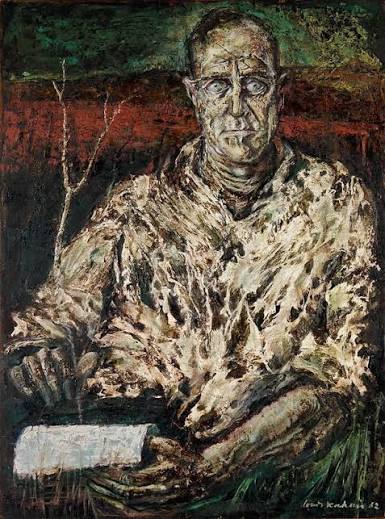
Louis Kahan, Patrick White, Archibald Prize, 1962 (Winner)
Patrick White remains Australia’s only recipient of the Nobel Prize in Literature. An aloof and aristocratic figure whose literary ability is undeniable, the only of his novels is The Vivisector (1970). This portrait speaks for itself in its stark and dramatic style. It appears almost torn from time rather than painted in the conventional sense.
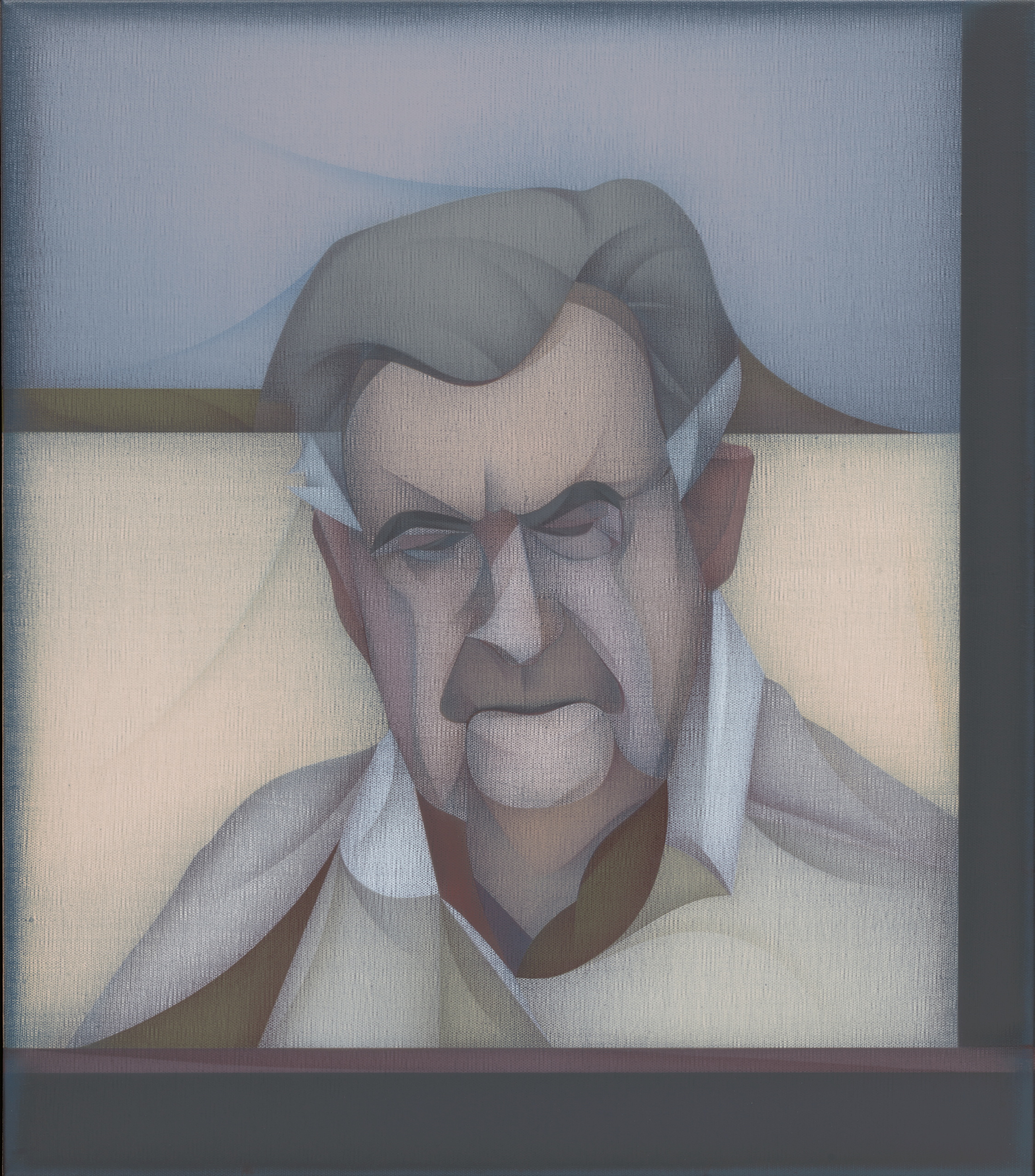
Mitch Cairns, Gerald Murnane, Archibald Prize, 2026
Tipped in some circles as Australia’s next Nobel Prize in Literature contender, Gerald Murnane has been internationally celebrated while remaining largely beneath public awareness because of the cerebral nature of his work. He has developed a reputation as a reclusive eccentric, although I find his writing, particularly his short fiction, extraordinary. This portrait mirrors the obscure and deeply intellectual quality of his writing remarkably well.
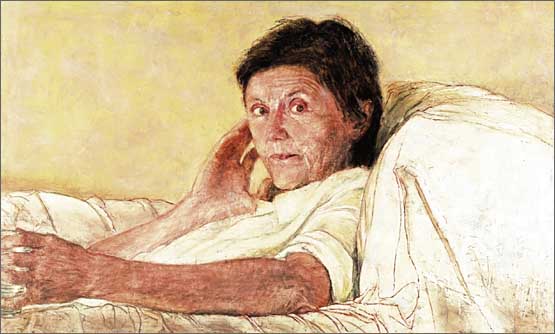
Jenny Sages, True Stories: Helen Garner, Archibald Prize, 2003
You have heard me ramble about Garner before. She is the elder titan of Melbourne literature. I enjoy this portrait immensely because it reminds me of her ability to invite readers into her world, almost confiding her sentences directly into their minds. There is something deeply conversational about this painting that perfectly complements her writing.
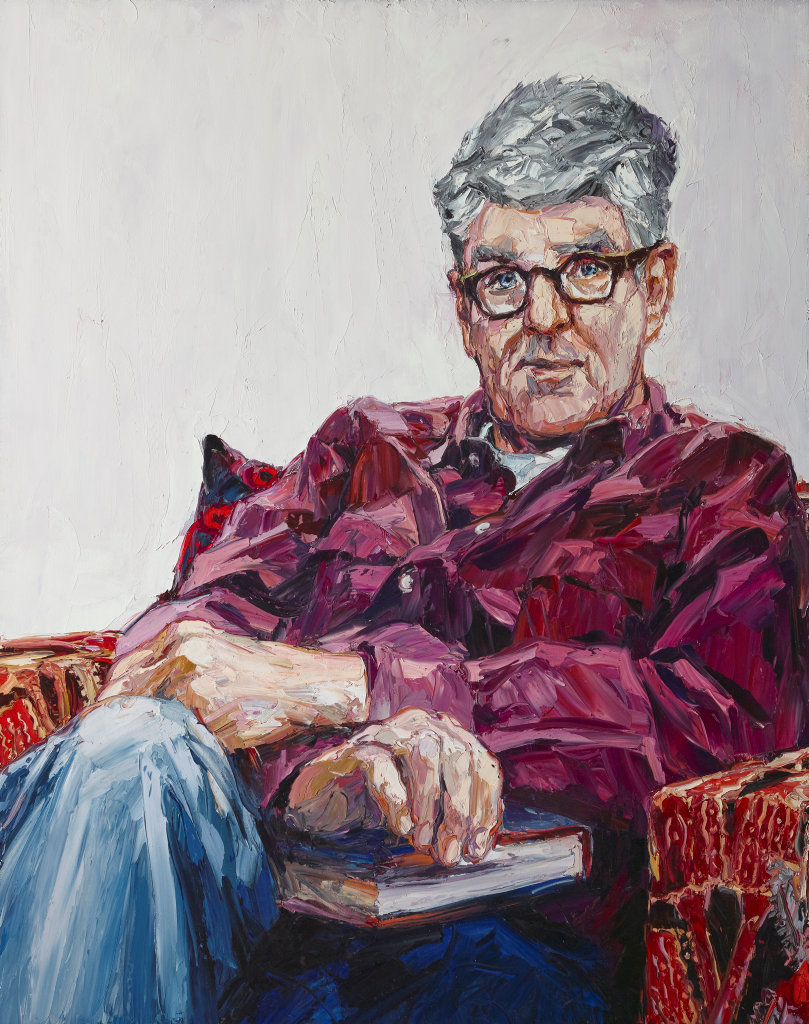
Nicholas Harding, David Marr, Archibald Prize, 2020
David Marr is another longstanding favourite of mine, and this portrait captures him beautifully. It presents him as avuncular, sincere, relaxed, and quietly authoritative. I admire both this painting and Marr’s writing. His biography of Patrick White remains one of Australia’s finest works of literary nonfiction.
Citations:
• Allen, Christopher. (2026) Why is it we prize ‘vulgarity, kitsch’?, published May 1 in The Australian, accessible through: https://kingstreetgallery.com.au/christopher-allens-review-of-the-2026-archibald-wynne-and-sulman-the-australian-published-may-1/
• Benson, Louise. (2020) Nepotism Glues the Arts Together, While the Rest of Us Come Unstuck, Elephant, accessible through: https://elephant.art/nepotism-glues-the-arts-together-while-the-rest-of-us-come-unstuck-louise-benson-30042020/
• Greiner, Kara. (May 2002) Not famous enough for the Archibald, The Sydney Morning Herald, accessible through: https://www.smh.com.au/national/not-famous-enough-for-the-archibald-20020531-gdfbqu.html
• Jefferson, Dee (2026) Think you have strong opinions about the 2026 Archibald prize? Check out the portraits that didn’t make the cut, Accessible through: https://www.theguardian.com/artanddesign/2026/may/14/2026-archibald-prize-runners-up-portraits-didnt-make-cut
• McDonald, John. (2024) Archibald Prize 2024, Published in the Sydney Morning Herald, 15 June, 2024, accessible through: https://www.johnmcdonald.net.au/2024/archibald-prize-2024/
• McDonald, John. (2026), The Archibald Prize 2026, accessible through: https://kingstreetgallery.com.au/wp-content/uploads/2025/05/2026-John-McDonald-The-Archibald-Prize-2026-by-John-McDonald.pdf
• West, Michael. (May 2026) Sensation, controversy: premier portrait to be unveiled, accessible through: https://michaelwest.com.au/sensation-controversy-premier-portrait-to-be-unveiled/#:~:text=Critic%20John%20McDonald%20believes%20the,art%20show%2C
%E2%80%9D%20he%20wrote

Social Media Generator
✖