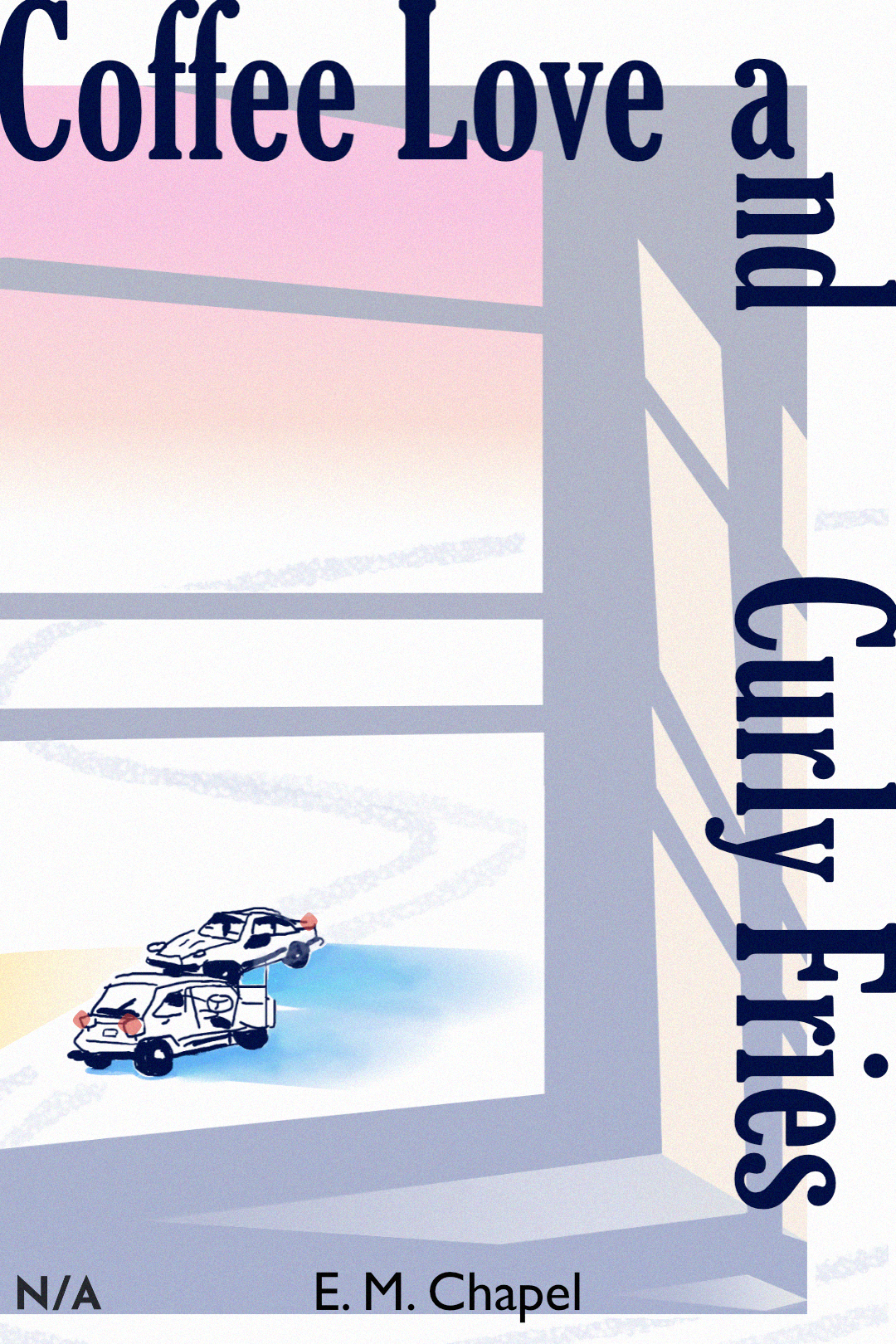
On the day Mr. See told the class about love, the salty streets were completely carpeted–a thick shag–in snow. Flakes as big as my eyeball floated from the cream sky, and the wind blew in swirls, but I could still see places where the sun was trying to break through. Scatters of light. It was going to be hell getting home, and I’d be crossing my fingers on the bus, no ice, no ice, the whole way home–just no freaking ice. The school day pattered on.
Snow fell quiet in dropped cotton kisses.
I wear my jacket in class every day. Mr. See’s classroom has one window that looks out on the parking lot below, and he keeps it open at all times, even over the weekend. Though I bet the janitors close it. Maybe he asked them not to. They would listen because everybody loves Mr. See. We shiver in the winter and learned quickly to take our jackets out of our lockers where we had stuffed them to wait out the day. Sometimes it’s kinda nice; fresh air dispersing the spritzes and sprays we swim around in. But it’s also super annoying.
Snow sheeted the parking lot below the window, each and every car disappearing beneath a layer of icing. But Mr. See says that nature and love are the food of life, so we should embrace them when we have the chance, that we should always keep the window open. It just seems cold to me.
Last week, Juliet came up to me and asked if I like cars. The skylight above our lockers was completely covered with snow, crystals shimmering over glass. How much pressure can those windows take? Would the frost break through and avalanche me alive? Would she dig through the snow to find me? You like cars too? She had asked. No, not really, but–Maybe I can.
She fixes them up and sells them, which is pretty cool. Maybe I can like cars, I told her. She laughed at that. I can like cars for that, I think. Silver bells. Sometimes my face turns pink. I hope it didn’t then.
Mr. See said he wanted to tell us all a love story. We groaned–hadn’t Marquez done enough to us for one day? But it wasn’t Marquez’s story. It was Mr. See’s. A story about a different snowy day–before our class ever lost that blue dog’s eyes–and he was driving home early from school. The teachers, he said, they all leave school after we do. I guess we keep trying to hit them with our beat-up, hand-me-down cars on our way out of the parking lot, where we speed home or do doughnuts. He says we try to kill them–not on purpose, I don’t think, but either way, he waits until the coast is clear of all us scary teens. I don’t think I’ve almost hit someone before. I’d probably remember that. On this snowy day, though, he told us, he had to pick his kids up early for a doctor’s appointment, so he left halfway through the day during the group B lunch. My lunch is group A, which means I have to eat a turkey sandwich, curly fries, all washed down with a foil-clad juice packet at 10:30 in the morning, right before running a mile in gym class. It’s all sweat and turkey for the rest of the day, and that’s never seemed all that good to me. No wonder the hallways are rank and rotten.
No wonder Mr. See lets in the snow.
The juniors and seniors get to leave school for lunch if they want to, which is okay, but you’ve still got to have a car if you want to go anywhere other than Walmart. If you’re seventeen and have a car, you can get French fries from a McDonald’s down the street instead of the curly ones from the cafeteria down the stairs. I think the fries in the cafeteria are a lot better because they’re actually hot and they’re not soggy from a steaming journey in the passenger’s seat or held fast between some jock’s thighs. But an hour of freedom is worth floppy fries and getting older. I guess.
That day with the “Eyes of a Blue Dog,” when Mr. See also told us his story, the window was open wide, and the snowflakes fell in marshmallow chunks. All we were thinking about was a snow day, about how much we had earned one. Would Juliet win in a snowball fight? I think she would. Flakes swirled downward. We thought about snow while Mr. See talked about the story, “Eyes of a Blue Dog.” Love and love and love, he said as the flakes layered over the windowsill. Gabriel Garcia Marquez said it, love, and love, I guess. In those trippy, dreamy words.
I watched the snow swirling.
In the art classroom, where I took drawing last year, they make a pot of coffee every day. You wander through the hallway, and it’s the normal nasty B.O., Axe body spray, and sticky, choking hormones at every twisting turn, but then you pass by the art room. And bam. Just coffee. Roasty and warm, and you can hear the sizzle and drip from the machine if you get there at the right time. And sometimes my 7:30 Red Bull isn’t good enough to make it to 9:00, let alone 10:00 or 11:00. And my mom told me that I can’t have two or else my heart will explode. That she worries, and I should eat an apple instead, some peanut butter, she says. But I don’t know about that. I usually pop into the writing room, make my way around, grab some coffee, and say hi to my old teachers from before. I think the teachers might be bored because they always wave and chatter when they see me. They ask about my weekend, about movies, and friends. It was boring, I tell them. Last weekend was too.
I wonder what Juliet watched this weekend–maybe YouTube or Batman–did she and her friends go to Joe’s for a burger and fries too? Maybe they hung out in the parking lot to eat in the curative weekend air. Maybe it was boring like mine.
What does it look like? The two of them asked my class—Mr. Marquez and Mr. See asked us, talking about blue dogs and breaths of falling snow. What does it look like? Love? When it’s walking down the street, or wandering the fluorescent aisles in the grocery store, how about in the school hallway chaos, sweating at the 24-hour gym, driving around town for something interesting to do, in our dreams?
Yesterday, when Juliet came up to me, she asked where I got the coffee. Hell, yeah. I can talk coffee. That’s what I told her. No problem. It was a white, winter day, and she was wearing a jacket like a skinned Muppet all purple and fuzzy. We stood just outside the front doors of the school, and everyone else swam around us while we talked. I like it when she talks about cars and the snowflakes stick like glitter to her lashes. All cars and snow and cars. What does it look like? They asked.
I raised my hand because what the hell were they talking about?
Love, Marquez said, whispering messages in dreams that leak.
Mr. See nodded, love.
I don’t know about that.
When Juliet asked me where I got the coffee, I took her to the art room. This is Juliet, Juliet, these are the old teachers. I see them every day. My weekend was boring, I told them as we walked by. We–me and Juliet together–went over to the coffee pot, which was still dripping and hissing. The cups next to the pot aren’t really big enough, so I showed her how I usually grab one from the cupboard the teachers restock from.
I don’t need to ask, which is cool.
She hadn’t met my counselor before. I wonder who hers is and if she likes them. I walked her back to the office while we waited for the drip to finish up. I can ask my counselor for stuff that I need, and he might say yes. That’s how I got my new glasses, but I don’t wear those at school. Just for homework and stuff, if I remember.
This is Juliet, everyone.
As the snow fell, Mr. See told us about that day. That other snowy day. He was sitting at a red light during B lunch. It’s when most of the juniors and seniors fly free. Big flakes slushed to icy puddles on the asphalt as he waited for green. Then love hit.
Today, Juliet and I got coffee again, and I showed her where they keep the half-and-half and the sugar, too. They sometimes stash some secret snacks over there. Before class, we talked about coffee and cars, and curly fries. I wonder if I should sit next to her tomorrow. Or if that would be weird. Maybe I should ask Mr. See.
Mr. See said that when he got hit that day in the snow while he waited for the light to turn green, the first thought he had was about his kids. He’s got two, I think. No. He’s got two, I know. He talks about them in every class at least one time. He said he saw their faces in his mind and heard their voices talking about soccer and cereal. When everything else went black. But he was okay. Only after he opened his eyes, after he was okay, he felt frustration. Felt annoyed, he said. Of car repairs, insurance companies, of being late to the doctor, and having to reschedule. Felt furious, he said. Of the faces of his sons, of his kids waiting, and worried, and wondering where he was. Of the awakened thought. Only a moment between him and his boys. Between never picking them up again. He should’ve waited, he said, just another hour, or should’ve asked his wife to grab them from school instead. But he was too excited to see them, he told us. To hear about soccer and cereal.
I wonder if my dad would be excited to take me to the doctor. We might talk about coffee. Would he leave work early? In the snow. Talk about curly fries at school. I could ask Mr. See. Maybe the art teachers. What do they think? But it’s kind of boring.
The insurance card was in Mr. See’s hand, hazards on, and he was closing the door behind him, but he told us, when he squinted through the falling snow, there was no movement in the other car. There was no damage, aside from his own headlight, he noticed after scoping out the scene, waving other drivers past. Lunchtime juniors and seniors.
The snow makes everything quiet. It’s like a giant blanket smothering everything beneath it. And Mr. See’s head was hurting because he must have hit it in the clash. The flakes fell silent, and even all the cars going by seemed to hush past. No one stopped. They all drove by until there was no one left at that light but Mr. See. And the guy who hit him.
There was no movement from the car.
His frustration was rising–his kids would be waiting and worried–he marched over to the driver’s side door. Every window was completely fogged over, the driver invisible. What the hell was this joker doing? Mr. See swears like that sometimes, even in class. He knocked. No answer.
A whole minute of knocking went by, then shivering, then knocking again. He had his phone open. 9-1-1, ready to go because something was wrong. Maybe he was hurt. Or maybe something else. But it was just a little bump. Just his own headlight. What was going on inside? And the snow was cold and quiet.
It was enough.
Mr. See yanked the door open, jumping back to a haul-ass position just in case.
I probably would’ve hit the deck no questions if it was me. Or ran away as fast as I could. Would my dad answer the phone if I called him then? I think he would.
But Mr. See didn’t need to hit the deck. Or call his dad.
It was just a kid.
Probably a senior, sporting a letterman jacket, like the ones all the football players sport daily: red and blue, a design unwearable and embarrassing after high school except by burnt-out bummers or at some kind of reunion. I probably won’t go to those. Will Juliet?
The angle was almost impossible to make out the letterman’s features. The guy’s left hand still had a death grip on the wheel. His body twisted, extended as far into the passenger side as he could go, clearly holding something below the passenger dash, eyes barely peeping above the wheel.
Mr. See told us how his heart ran all around like a thumping, metal bassline. He was in the military, I think, so his imagination went off roaming. All of the things someone could be reaching for raced like Hell’s grocery list through his head. What did he have to be ready for? What did he have to do?
Mr. See tried to visualize the details of his sons’ faces until, with wet, blue eyes, the letterman looked up at him. Tears streaming down his face, his chin quivered like frostbite. He desperately whimpered sorrys, hiccupped pleas of don’t call the cops, don’t call my mom, and what do I do nows. Mr. See went blank.
The letterman choked how sorry, so, so sorry he was, sir, through macho tears. He couldn’t see the lines on the road because the windshield was all fogged up. Mr. See glanced around at the falling snow and the gray and silent sky, still eyeing the kid’s right hand, which hadn’t moved at all. And he nodded.
What he would give to be back in his own car, he said, driving to the doctor, his kids in the back fighting and playing, screeching, and laughing. He’s going to tell his kids this whole story when they’re older, I bet. Even the part where he nearly peed his pants and booked it when the letterman in the car suddenly straightened from the passenger’s side and aimed the contents of his right hand directly at Mr. See’s face.
Everything stopped swirling.
The kid blinked.
Mr. See’s face must have looked wild, drained, and distorted.
Then in a tiny mouse voice, the letterman whispered sorry he needed to keep them warm and sorry sorry. The heater was out on the driver’s side. He desperately needed to get back before the end of lunch because the fries he had brought for his girlfriend were getting cold, and she had broken her leg, and she was all alone, and she needed–the letterman’s eyes lagoon blue and overflowing, she loves fries, he choked. Lukewarm and soggy, he had to do his best. Had to make it back to her. He didn’t want her to slip on ice, so he went himself. Didn’t want her to fall and hurt herself, the letterman said, with eyes like a dog, and looked at the sloppy bag of fries in his outstretched hand, which were definitely worse than the ones in the cafeteria. But you pay a price for that taste of freedom. Even if it’s second-hand. I guess I’ll find out when I’m older. He had been holding the fries under the passenger’s side heater as he drove, so they wouldn’t get cold because she really needed a pick-me-up and and sorry sorry sorry.
His blue eyes welled.
Mr. See’s pulse steadied–it had been like a marching band going, thumping around his chest, he told us–but his breath calmed, and he nodded at the letterman before returning to his car, one headlight just a little messed up. The light turned green and he drove to pick up his kids. Snowflakes curled.
That’s love, Mr see said after telling us a story about a gray and snowy day. What is? What is love, we asked? But he just smiled and told us to take out Pablo Neruda. The bell for lunch would ring in twenty-one minutes, and I bet I wasn’t the only one who could smell the fries–waiting for us, warm, crispy spirals in the cafeteria below. Juliet had asked what I was having for lunch. We could sit together, she said as the snow eddied, and I could almost taste those fries, rich and substantial. What was I doing for lunch? Fries. I think, and then I shrugged a little, like the guys in the movies do. How can you tell when something is significant? What was I doing for lunch? Sitting with you. I couldn’t say that, though. But she nodded at me anyway. So maybe we’ll sit together. Maybe she likes fries too. Outside, was a different world now, snow spiraled. Nothing looked like it had when the bus dropped me off in the morning. Now quilted in clear white, and a horizon of fries was twenty-one minutes away. Maybe.
Mr. See sat on the windowsill, a winter breath from the open window twisting around him, and he held up Neruda. Love, he said.
I opened my book.
I don’t know about that.