

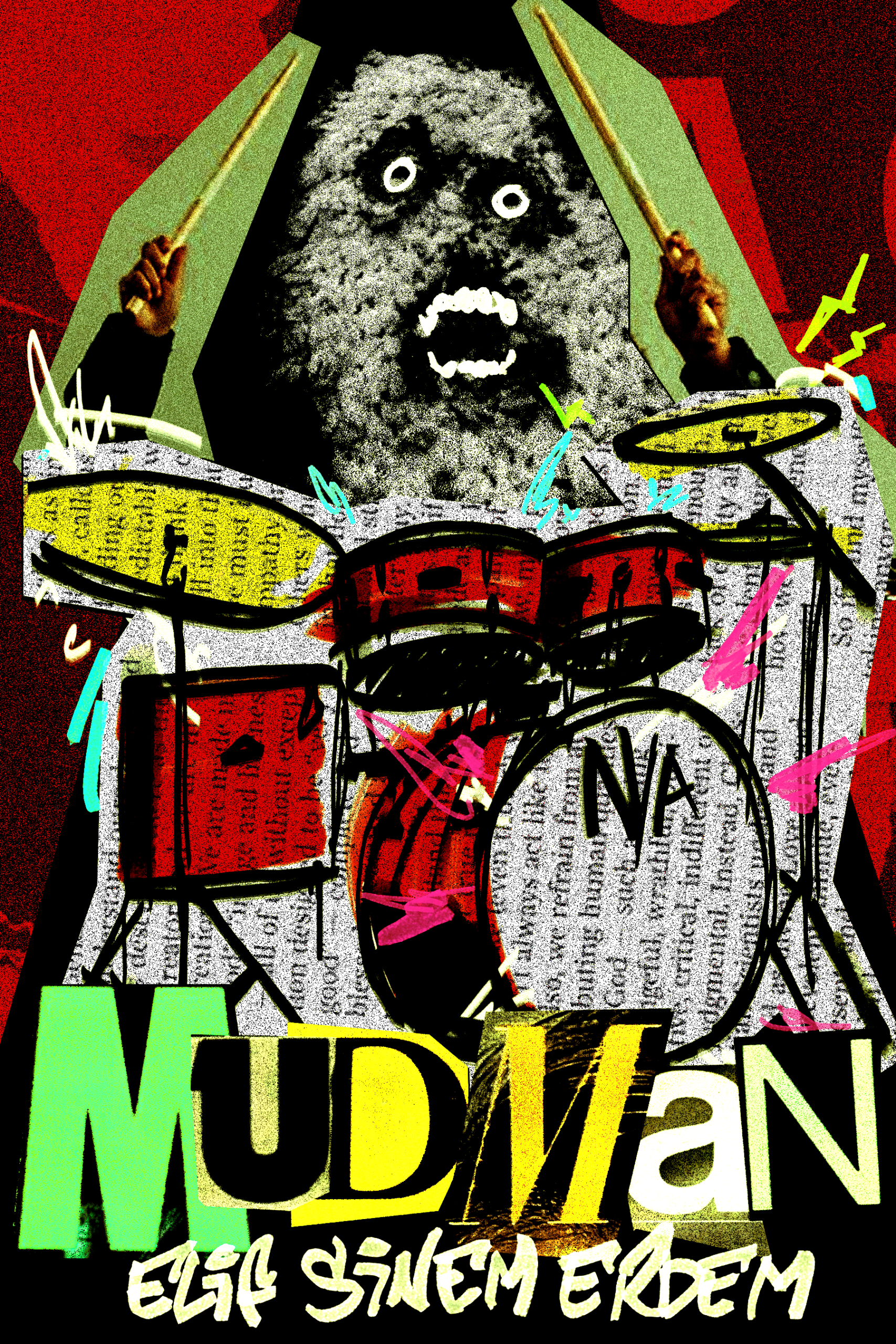
In Reese’s recurring dream, Dylan stepped outside for a moment and a man of mud came in. His mouth opened wide; his teeth were rotten; he was going to kill Reese. Dylan, his brother, was already dead.
I.
He got rid of the Saturn Astra in Frederick, Maryland. The car barely made any money, a tenth of the price that his father had bought his first car for (a Volkswagen), but its AC had kicked the bucket and he had no money for its repair. The buyer was a white woman that smelled of garbage and expired food, and this seemed to be the last of her money.
It was enough for new clothes, measly lunch, and a trip to the pool. In the men’s bathroom, he applied hair dye on his fraying thin hair, and stepped outside to watch other people, hear snatches of names he could take from. At the pool: a mild murmur, drowned out by the waves the swimmers made. He didn’t see the appeal of swimming, largely because he couldn’t. His father, whose father had been in the Navy, had never much enjoyed swimming. His mother loved the sea but had no use for the pool; the chlorine didn’t do her curly hair any good, and she hated wearing swimming caps. She told him multiple times to take care of his hair, to which he — then as now — responded with bleach and chemicals. He had done this for a couple of towns now: wash the dye; find a job, a crappy place to stay; go do whatever job he found, cut down on food until he had enough money for a new car. Then he’d drive off until he ran out of fuel or arrived at the next town, whichever came first.
Back in the bathroom, he stared at a shock of red hair going off in all directions, with spots of white blond from where he had forgotten to apply the dye. He looked like a bet gone wrong. A night nobody remembered, the morning that everybody regretted.
“Mickey, go get your things!” he heard a boy shout. He smirked to himself.
Soon enough, he came across a record store and badgered the owner into staying there in exchange for working at the record store; the owner, a large white man, offered a storage room that was really a recording room for local bands, and his own bed was a mat tossed aside at the corner. There was a drum kit installed prominently at the center. He decided then and there that this would be his instrument and began to play drum fills, not very good ones, but soon enough he approached something he could only describe as sludge. “Good playing,” he heard.
Across him was a dark-skinned man; bald and hunching, carrying a guitar in his hand, he approached Mickey with a sparkle in his eyes.
“How long have you been here for?” Mickey asked.
“Maybe an hour. You were playing the drum track to When Doves Cry there, weren’t you?”
Mickey shook his head. “I was just playing anything.”
The man took out the guitar from his case and plugged it in. He swished over the strings, playing in a way that was neither rock nor R&B nor punk; it was too jerky, too jagged, too discordant. It stretched any definition of the word music, but the man nevertheless continued playing.
Mickey hit the kick once. The other man kept playing. Mickey hit the kick again. He added a snare when he felt like it, then a drum fill. The logic was that there was none. The drum barely made sense with the now screeching guitar, but it made Mickey play, and Denzel did not stop, either.
Denzel abruptly stopped. Mickey added a drum fill and hit the hi hat, and Denzel laughed.
“This ain’t your instrument, but you obviously played one before,” Denzel said. “And you obviously know rock.”
Mickey smiled. “So do you.”
“What do you think of punk?”
“You mean what Nirvana’s doing? Garbage.”
Denzel smirked. “And Television?”
He shrugged so as to answer the question without addressing it. “I like music that ain’t got much to do with charts. They’re played on college radio once and they think they’re hot shit. MTV made it worse. There’s no counterculture anymore. It’s all mainstream now. Fugazi might be cool, but they don’t alienate. It’s ‘cause Black people aren’t part of this. No wonder Bad Brains is the only band worth a damn.”
He heard Dylan, almost smelled the waft of cigarettes, in half of these words. The more Mickey talked, the wider Denzel’s grin got.
“Name’s Don. Join my band,” Denzel said.
“Mickey.” He got up and shook his hand. “Gladly.”
In this version of the dream, they play together: Reese on drums, Dylan on guitar. A knock to the door. Dylan stops playing, then goes out to see who it is. Mudman comes in. He looks at Reese, and Reese knows he’s going to die. He starts to whack the drums instead. The force of it kicks Mudman back and down to the ground; now Reese pummels on top of him, and he’s gone.
The name was Bridgeburn. Their sound: annihilistic, a word that Don combined from annihilation and nihilism. Some of the pamphlets he made, the ones that Mickey could read anyway, declared, “It isn’t metal, nor punk. Bridgeburn is COUNTERCULTURAL, INTELLECTUAL and VISCERAL.” Mickey had no idea how intellect and viscera could correlate, but Don was not receptive to feedback.
Don was tall, though how tall, Mickey couldn’t tell from his hunch. Maybe six foot five, maybe more. Everything related to Bridgeburn went through him: garish posters and potential album covers, melodies so gossamer they might as well be hallucinations, lyrics that were best performed spoken and not sung. When he played lead guitar, he’d stand like he was peering down on an ant crossing his path. Mickey surprised himself by identifying Lou Reed out of the creative rubble — his father revered him, and the first record Mickey had heard was The Velvet Underground & Nico.
Don, upon hearing the name, turned to Mickey with an indignant air, glared once, and decided to sing instead. It sounded like scratching metal.
Blair excused herself for a smoke break, motioning for Mickey to follow; as soon as they were out, Blair said, “Make him speak again. This is horrible.”
“Wasn’t aware this was on me.”
“Say you didn’t hear Lou Reed.” She glared at him and puffed smoke in his direction. “Soon as I’m done with this cig. The other day, my supervisor wouldn’t let me finish it. Because the shelves weren’t filled yet.” She rolled her eyes. “Damn shelves never fucking end. And this cig’s not strong enough.”
Blair, the bassist, was also tall, but she stood straight as a rod when playing. Her face communicated her desire to talk as little as possible; but here, on one of her many smoke breaks, with Mickey next to her, it exploded to long complaints of her job at the supermarket, which included nasty customers, odd coworkers, pesky bags and dusty shelves. That she didn’t bring up her parents’ heritage seemed a dogged insistence that she was as American as everyone else, though frequent rants about citizenship applications let Mickey know that she was not, at least in the legal sense. She never smiled, though it wasn’t for lack of Mickey trying; the one time he didn’t, she asked him if he had gotten ill, or if he was mentally ill. He said it was the latter; it made her smirk.
They returned from the smoke break. Mickey said to Don, right away, that the Lou Reed from before was bullshit. Don nodded; for a moment the air in the room was blessedly silent, and then Don decided to sing again. Mickey exchanged a glance with Blair and shrugged. His job was to play drums, though in his case, it translated to hitting them with no rhyme or reason. As long as he kept Mudman at bay.
He sometimes thought Don would disappear into his brown jacket, the jacket taking over, turning liquid, like mud. This usually happened when Don decided to voice his thoughts out loud. Like how he thought Mickey was more white than black. Said it had to do with the smell, the vibe. Blair only shrugged when Mickey looked at her for help. She thought him soft because he didn’t fight.
It wasn’t that Mickey hadn’t thought of any violence. When Dylan fought with his father, using his actual fists, Mickey had dreamed of fighting his dad all night, ending up with a bloody mouth. It was that Mickey couldn’t fight. He blamed his nose for it, which bled by itself. Anything could set it off and just about everything did. He couldn’t smell and taste all that much, but blood, he always managed to. Its pungent, metal smell never faded. That interrupted the rehearsals more often than it had to, and only because the drums started to sound wet, which was against the intellectual viscera that Don wanted Bridgeburn to have.
Don thought Mickey had polyps in the nose. Don thought maybe Mickey should play one song with the snare only, no kicks. Don thought Mickey should get himself checked. Maybe it was the stress. Maybe it was just because he was genetically malfunctioned, a cripple.
Those times Mickey thought of violence again. Surely there would be some way to hurl something at Don and rattle his brain a little. But Don told him to speak up if he had something to say, and Mickey didn’t.
Dylan, in his mind, always half-grinned when he said this. Just before Reese would go somewhere, he’d shrug. Reese knew the story, right? There was this cult member who believed he was made of mud. He’d go around biting others, harass and psychologically scar them to induct them to the cult. He did this by biting people: their legs, their necks, their shoulders. Then these people would become mud people. It was a virus of some kind. So better not walk alone when it’s mud season. Mudman would always be there. When he told his story, the smile never reached his eyes.
It was just past dawn when Mickey sat in front of the drums. He whacked over the snare, with both drumsticks and quick succession, then assaulted the rim like he was going to break the drumsticks in the hope that it would hit him. Whack-whack-whack, patter-patter-patter, clunk, clunk.
“MUDMAN!” he shouted. He shouted it again, elongating the u, the a, a growl as he continued whacking over and over. “MUD! MUD! MUD!”
Distantly he heard the bass and the guitar joining him, but Mickey heard his own noise first, and he felt his throat strain from shouting. Blood dripped down the snare, mixing with the sweat from his hands. The beat was audibly damp. He stopped to a thumping heart, throbbing hands, and a clogged nose. He couldn’t tell where the blood came from: his hands, his nose, his fingers. His head kept shouting: MUD! MUD! MUD!
Blair and Don looked at him, Blair with her mouth open, Don with a glimmer in his eyes.
“Mudman?” Blair asked.
Mickey swallowed. He wiped the blood off his nose. The world spun ever so slightly in his vision; he distinctly felt that he would fall if he were to get up. He nodded. “This is it, man,” Don said. “Where’d you get that one from?”
Blair raised an eyebrow. “You like it? Thought you didn’t want nobody doing the lyrics but you.”
Don laughed once. “I never said that.”
II.
In the dreams, Mickey was aware he was dying and then dead. Every time he woke up, it felt like he was reborn. It didn’t feel as holy as it sounded.
“Mudman”, pressed and distributed independently, came at a perfect time. Punk had broken, as though punk was a dam keeping the putrid water of music journalism and the overall establishment at bay, and now, more than usual, Mickey found Don talking to white people in their band shirts and a card in their hands. Sometimes, they ran into Mickey, mostly at restrooms; those times, Mickey pointed outside and led them back to Don. Don was clearly into it. All the venomous looks he shot Mickey’s way were proof of it. In the touring van, Don openly discussed labels as though either Mickey or Blair had a say. SST was a no-go; Dischord was good, but Don didn’t like to be in DC; Geffen was an absolute no-go. All major labels were off the table, including a man from Atlantic Records that had promised them “Beatles money”.
In Chicago, Mickey paid with the remainder of his money for a recording studio, enough for three days. They were about to record “Mudman”, the only song of Bridgeburn that hit college radio, when a journalist – a white woman with thick-rimmed glasses – waited for them at the entrance. Blair was nowhere to be seen, probably in some bathroom trying to get her fix, and Don said they could use the break.
They conducted the interview at the studio. The journalist was from a high-profile music magazine that had recently begun to interview underground bands. Her eyes were only on Mickey, and she shook his hand first.
“And Blair?” she asked.
Don looked at Mickey. Mickey rolled his eyes.
“We can continue,” Don said.
The first question was if Don was inspired by Public Enemy, because he, too, was “rapping”.
Don: “It’s not rap. I don’t think of my performance as rap.”
“Sounds like rap to me,” the journalist said.
“Is this because I’m Black?”
“It’s because you’re rapping.”
“We’re not—” Mickey said. Don raised his eyebrows, but didn’t cut him short. “We’re not inspired by rap. I would say we do our own thing.”
The journalist turned to him with a wide grin. “Surely you’re inspired by someone.” “Mickey has no inspirations,” Don answered. His posture was eminently calm; Mickey had no doubt that Don believed this to be true. “He does what I tell him to.” “So Mudman is really your creation?” the journalist asked.
“It’s not,” Mickey said before Don could claim that it was. “It’s mine.” Don narrowed his eyes, straightening up as the last resort of towering over Mickey in some capacity, but let him talk.
“I like Fugazi,” Mickey answered. “Guy Picciotto is a great songwriter, abstract and evocative. I don’t suppose I have a lot of inspirations besides that. Maybe some poems my mom used to read to me, but I haven’t been able to read much these days.”
“Yes.” She jotted this down. “Yes, I hear your similarities now. So would you categorize your work in Bridgeburn as post-hardcore as well, or would you call it emocore?” Bridgeburn was a band with no remarkable talents swept up in a tide of media interest. They had one song, an emotional outburst Mickey had to perform by himself every other day, and it was the one Don didn’t write. “I think we’re an older brand of post-punk, closer to Wire. It’s about rattling the soul.”
“We’re not close to anything,” Don said. He stood up so straight that he appeared a head taller than Mickey. “People are close to us. They see us and want to steal what we got.” She looked at Don for the first time. “Mind telling names?”
“Depeche Mode stole from our outfits. Looks too. The goatee—”
Mickey laughed; he closed his mouth so more wouldn’t come out. That was his goatee, not Don’s.
“Goatees are dope,” Mickey said once he calmed himself down. The journalist’s head turned right back to him. “Black and leather too. The scene is smaller than it looks, so I think some overlaps are part of the point.”
Seeing her jot it down brought him a little relief. At least he would come out alright. These were group projects individually graded. Don would come to the same conclusion soon enough, and when that happened, Mickey would take the “Beatles money” an Atlantic representative promised Don, go solo, buy a plane, and fly across America. He managed to write some lyrics lately. There were toplines, some chords. He could use them all and it’d still be better than the bullshit they recorded here. He rather liked it up on stage; the lights, the shouts, the sweat, the blood working together to create a concoction more powerful than chloroform. It was so nice to not exist for an hour or two. To not remember anything afterward.
The journalist looked at him like she wanted all area access into his brain. “Mudman…” she said. “What a song. Truly ferocious.”
Don said, “Matter of fact, we’re about to record it right now.”
She furiously nodded. “Is it alright if I could sit in the room and watch you? To my understanding, it is a Mickey Stanbull solo.”
“It is—“ Mickey started.
“Not a solo,” Don said, voice so clipped that Mickey flinched.
The silence that followed was cold and thick. She didn’t write this down. “Don will play the guitar,” Mickey murmured.
“On a song with only drums?”
“Studio versions always differ,” Don said. “And it originally started as a band.” The journalist jotted it down. “But Mickey, you can play the guitar.”
Mickey nodded. “I can. I started out acoustic. I wouldn’t mind going acoustic, even folksy, down the road.”
She tapped against the notepad. “This is interesting. I wonder if you heard of Dylan Fitz—“
“I don’t want you to be part of it,” Don suddenly said.
“—gerald,” the journalist said. She turned to Don. “No?”
Don’s leg jerked up and down.
“Gerald?” Mickey asked. What’s this about?”
“Dylan Fitzgerald. This talented young songwriter from Vermont. It’s a real tragedy what happened to him. We could discuss this off the record,” the journalist said. She glanced at Don. “Are you truly against me joining your recording?”
Suicide was not a tragedy. To have a song stolen, to find no audience, to put all your hopes in one song – these things were once tragedies to him, but now that Mickey had met record label executives hounding him in parking lots, asking him to sign a contract, he understood that it was all quicksand regardless. The tragedy was that Dylan had told Reese he’d be outside for a minute and never returned.
“Yes,” Don said. “Shit comes out when it comes out.”
“I agree,” Mickey added. “It should be a surprise to everybody.”
The journalist nodded, peeked at her wristwatch, and cleared her wrist. “Final question. Mickey Stanbull, Mudman, I believe, is deeply personal to you. Where I’m from, in Vermont, we have five seasons and not four. Lots of mud there. Vonnegut called it Unlocking.”
“That’s a good speech,” Mickey said. “I know that one.”
“So are you from Vermont?”
Mickey laughed. “Yes.”
She fixed her glasses. “So how come you don’t know Dylan Fitzgerald?” Mickey didn’t know Dylan; Reese did. But he felt like Reese again. He felt it like toothpaste remnants on his shirt. He was too old, too tired to think that driving from state to state would wash it away, but he did once harbor the hope that Reese Fitzgerald would reemerge as a part of himself, like a snippet of a melody in his head. Instead, Reese had become a journalist’s scoop, part of the coveted biography of Mickey Stanbull.
He found it quite hard to breathe in here. “Burlington has room for… um, all kinds of lives and stories,” he managed to say.
“I believe he had a brother. I saw him once. They performed the song together, over at the Blunder, in South End?”
“That’s nice.”
“I’m just saying that you look like him.”
His mouth felt stuffed with cotton. “Is it because I’m Black?” Mickey asked. She didn’t answer. They left it at that. She shook his hand and grazed Don’s.
As soon as she was gone Don stood up straight; he seemed seven feet tall. He entered the recording booth, cocked his jaw at Mickey, and picked up his Fender.
“You don’t need the electric guitar,” Don said.
He whacked it down to the ground in a beautiful arc. Even from the isolated room, the sound was gnarly. The recording engineer, a muscular man with a Viking-like beard, shot up from his deck. But Mickey was faster; he flung the door open, he was about to swing his clenched fists, but a breath out and blood dripped down his nose, all over the rug. He put his hands to stop it; energy seeped out of him like a teabag dropped into hot water. He could barely stand straight, saw stars in his vision, black and white. He fell to the ground, his fingers sticky.
The viking jostled past Mickey, which made him bleed even more, and now it dripped from his palm, thudding onto the rug. “Get the hell out of my studio!” the man bellowed. Mickey felt something past him and slid to the ground.
III.
He left the record store, the one in Frederick. The sky was a slab of white marble, the streets swept clean save for one figure at the horizon.
Mickey knew at once that figure was Mudman.
He wanted to turn around, but his body had become stone, his eyes burning the longer he stared at Mudman. His mouth was parched; he couldn’t scream. His heart thumped too slow. When he did move, it was a sudden jerking motion. It didn’t hurt his body, nor his legs. Soon he floated backwards, and the entire time, he stared at Mudman. Mudman was getting closer by the second. He was running, sprinting towards Mickey. There was a baton in his hand that he whipped out, and his rattle petrified Mickey.
Mickey fell. Now Mudman was on top of Mickey.
“I…” Mudman began. A disgusting mix of horse and human feces emanated off him. “I… crave….”
Mickey was going to die.
He shouted, screamed for help, yelled for somebody to come save him, but no one was there. Not one person opened their windows. He staggered up, felt his feet hit the concrete as he ran as hard as he could. The horizon didn’t move. Something whipped him to the ground again. His whole body shook from his tears, his open, loud sobs. He couldn’t move his body, and this time, he felt a sudden coldness in his legs. He was being stripped; Mudman would eat him, leg up; Mudman would kill him, He closed his eyes shut and let snot and tears run down his face to the concrete. Everything in him tensed. There was no God to pray to. Only Dylan on the other side.
His stomach growled. Behind him, he couldn’t feel Mudman anymore. He felt something wet and rather sticky beneath him. When he opened his eyes, he found he lay on a puddle, staining the street ruby red.
Then he felt a horrifyingly large scraping inside his stomach. Like he’d never eaten before.
Mickey woke up. He was in the recording room. The viking man was shouting at Don; there was a fight of some kind, outside the studio, the viking’s arms pressed against Don’s, locked in something Mickey couldn’t quite get. But he saw Don, Don in his coat, and he felt the scraping from the dream that didn’t feel like a dream anymore. He felt himself floating toward Don. He heard himself say, “I’ll handle him”. They walked outside. Don looked at him and asked, “What?”
What a nice day it was outside, crisp and blue. Dylan killed himself on a day like this one. Mudman had never had a chance to bite him. And if there wasn’t Dylan to warn him from the threat, then could Reese be blamed for being caught after all? He tasted blood on his mouth. “I…” he said, “I crave.”
IV.
One to Watch: Mickey Stanbull
This story was reported by Janet Lexington-Schwartz
As soon as he got onto the mic, a blue Jazzmaster strapped on his shoulder, Mickey Stanbull bellowed MUDMAN on stage and gave everybody a good fright. Time stood still and became an eternal present — the thick riffs that were choked further against the amp; the repeated wailing, oh my God, the wailing; the face, the locks falling like an angel fallen to the pits of hell. This man spells out sex, desperation, and dirt all at once.
The pit waited for this moment for almost an hour. And in four minutes, this grim eternity was over. I was rattled, and grateful that this was the last song. The entire stage was as spellbound as I was.
Rock cannot be consumed through radio and MTV alone, and Mickey Stanbull is living proof of it. He has a presence best experienced live. No more nerdy characters mumbling their way to the stage; it’s not cool to act uncool, despite whatever pretensions our current leading men are under; and it’s not cool to be overeager about stardom, despite whatever delusions Billy Corgan puts himself in. Our greatest frontmen are showmen, whether conscious or not, whether willing to play on purpose or by accident. Hours ago, in conversation, he struck me as the former; now, I am not so certain.
After “Mudman” ended, Stanbull locked eyes with the nearest spotlight. His face was startlingly empty when he looked up, as silent as everyone else. The audience erupted into applause, roared for an encore, but Stanbull moved backstage without thanking anyone. I couldn’t help it; I ran backstage, a few fans in tow, calling for him. He turned and didn’t seem to understand. He looked at us and seemed to ask himself who “Mickey Stanbull” was. It was to the degree that I briefly wondered if this “mud-man” he sang about chewed at critical portions of his brain, leaving him crippled but savant, without an identity. In truth, as he tells me later, he was rattled too. He felt the song exactly as we did, an earthquake of an experience. What had just happened could not be repeated — until it would have to, all across America, for many years on end.
That night, in Chicago, he announced his departure from Bridgeburn. The death of a band is the birth of another star.
Lately, Reese dreamt of him playing music with Dylan, both on acoustic. He’d toured all across America, and he was in Connecticut now. It wouldn’t take long to go back to Vermont now, just in time for mud season. He’d just have to wait for Dylan to step outside for a little bit.


Social Media Generator
✖